

Alcohol use disorder (AUD) remains the most prevalent type of addiction in the US. According to the National Survey on Drug Use and Health (NSDUH), over 27 million people ages 12 and older struggle with an AUD.
Only as few as 7.9% of those needing help with alcohol abuse receive appropriate support and treatment.
People trying to overcome alcohol dependence typically experience alcohol withdrawal syndrome when they stop or reduce their drinking. Symptoms can range from mild discomfort to life-threatening complications.
Healthcare providers can use medications, including benzodiazepines and gabapentin, to alleviate withdrawal. But their specific medical applications can differ depending on the patient’s needs.
What is Gabapentin?
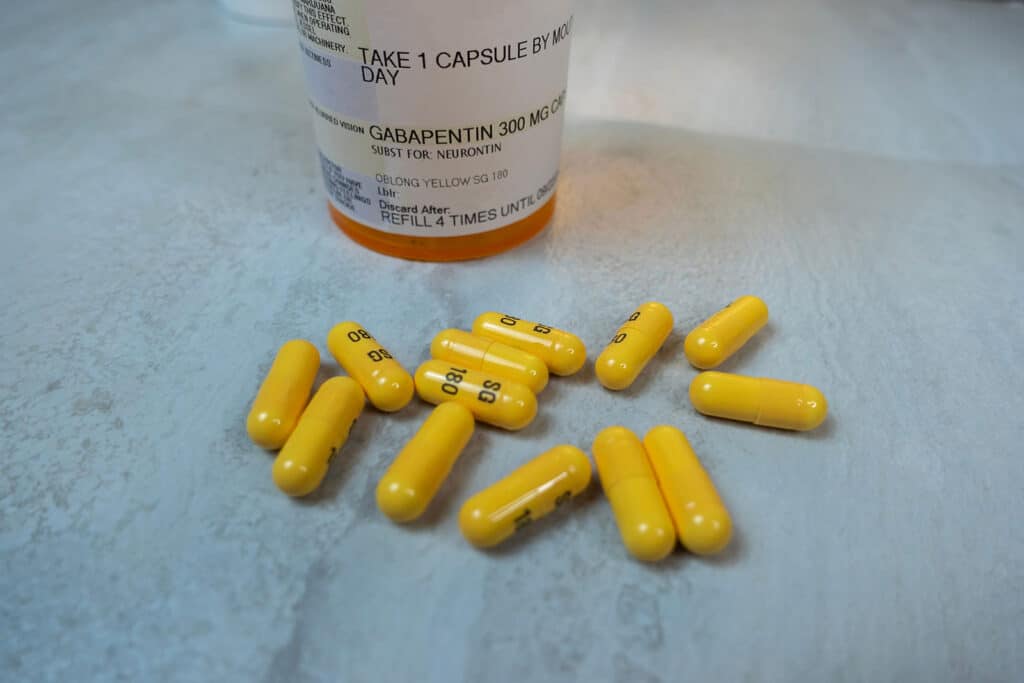
Gabapentin is a prescription medication also known as a gamma aminobutyric acid (GABA) analogue, which reduces neuron hyperactivity in the brain. It’s primarily used as an anticonvulsant for people living with epilepsy.
Common brand names for gabapentin are Neurontin, Gralize, and Horizant.
Gabapentin can manage seizures for individuals with epilepsy who take the drug. Some healthcare providers prescribe the drug for anxiety and sleep disorders.
Another use for gabapentin is to reduce chronic pain caused by nerve damage. People who have had a recent shingles outbreak can develop a condition called postherpetic neuralgia, which causes long-lasting nerve pain in the affected area.
Gabapentin reduces pain by calming the overactive nerve cells. It does this by binding to calcium channels in the spinal cord and brain and blocking pain signals.
Other conditions when gabapentin can be prescribed are:
- Irritable bowel syndrome
- Fibromyalgia
- Neuropathic pain
- Resistant depression
- Bipolar disorder
- Alcohol withdrawal
While the U.S. Food and Drug Administration and the DEA don’t, some states categorize gabapentin as a Schedule V controlled substance.
How Does Gabapentin Help With Alcohol Withdrawal?
Generally, it’s not recommended to take gabapentin with alcohol, as some of the drug’s side effects include drowsiness and dizziness. Alcohol produces a similar effect, which can lead to more impaired coordination and alertness.
However, because of its pain-relieving and anticonvulsant properties, gabapentin is sometimes used off-label to manage specific alcohol withdrawal symptoms.
Off-label means that a licensed physician uses a particular medicine for purposes not listed on the label if they believe it helps the patient.
According to a 2020 study, individuals going through alcohol withdrawal who take gabapentin exhibited higher tolerance to their symptoms than those who don’t.
The American Society of Addiction Medicine (ASAM) includes gabapentin in its guidelines for alternative medications for patients dealing with mild to moderate withdrawal syndrome.
Anxiety, Insomnia, and Other Symptoms
People recovering from an AUD may experience a wide range of symptoms when they stop or cut back on drinking.
Examples of these symptoms are:
- Anxiety
- Sleeping problems
- Irritability
- Sweating
- Tremors
- Nausea
- Body aches
Delirium tremens, characterized by seizures and hallucinations, is a life-threatening complication that can happen when someone suddenly stops drinking after a long time of alcohol consumption.
Studies suggest that many of these withdrawal symptoms are caused by a reduction in GABA activity and enhanced glutamate. Gabapentin can help manage the above symptoms by increasing GABA and minimizing glutamate release.
Moreover, the drug can minimize withdrawal-induced anxiety by reducing the release of neurotransmitters causing overstimulation in the nervous system that leads to pain, panic, and anxiety.
The increase of GABA also results in a calming effect, easing anxiousness, and helping patients feel less on edge while adjusting to alcohol abstinence.
Insomnia is another problematic issue that AUD patients experience in the early stages of recovery. Sleeping issues are about five times more common during detoxification and begin as quickly as 6 to 12 hours after the person’s last drink.
Gabapentin’s calming effect by regulating neurotransmitters promotes slow-wave, restorative sleep and reduces interruptions.
Alcohol Cravings and Relapse Prevention
Another way the anticonvulsant can help with AUD is by reducing alcohol cravings, which is important for people trying to maintain sobriety.
A randomized, double-blind placebo trial involving 60 participants in a 28-day gabapentin treatment found that:
- Those who took the drug experienced a reduction in cravings
- Significantly less alcohol was consumed
- There’s an increase in abstinence days
- Individuals treated with gabapentin are less likely to drink out of habit
Another clinical trial has similarly shown that people who are treated with some gabapentin doses have fewer heavy drinking days.
Other studies, however, found no significant advantage to gabapentin when compared to other treatment options available for overcoming AUD.
What Are the Side Effects of Gabapentin?
Even when used as prescribed, taking gabapentin for extended periods can lead to a range of side effects, such as:
- Memory troubles
- Dizziness
- Weight gain
- Dry mouth
- Sleepiness
- Swelling
- Constipation
- Diarrhea
- Heartburn
- Fatigue
- A depressed mood
Although the FDA and the DEA don’t classify the anticonvulsant as a controlled substance, stopping gabapentin intake can lead to some withdrawal symptoms.
It’s not uncommon for those who took the medication to experience nausea, sweating, and pain. As such, when taking the drug, it’s important to follow your physician’s directions closely to prevent health complications.
Taking gabapentin outside a doctor’s supervision can be dangerous, especially when mixed with alcohol, opioids, or antidepressants.
When Is Gabapentin Appropriate For Treating AUD?
While gabapentin has been proven to have some beneficial uses in managing alcohol withdrawal symptoms, most experts agree that it doesn’t replace first-line medications for alcohol addiction.
The epilepsy medication can be suitable for recovering rehab patients who don’t respond well to standard treatment.
Based on the current research, gabapentin may be effective for preventing relapse and promoting abstinence in early treatment for mild to moderate withdrawal cases.
Benzodiazepines remain the preferred and safest medication, particularly for severe instances of alcohol withdrawal syndrome (AWS), particularly for patients with a high risk of seizures.
Gabapentin vs Benzodiazepine
There are several good reasons why benzodiazepines are the primary choice in pharmacotherapy involving alcohol withdrawal.
What Is a Benzodiazepine?
Benzos are a class of depressant drugs used for treating conditions related to the brain and the central nervous system (CNS), such as anxiety, panic disorders, muscle spasms, epilepsy, and seizures.
Depressants like benzodiazepines do this by slowing down brain and CNS activities, which results in calming effects (sedation, less anxiety, etc.).
That said, because they’re highly addictive, they’re tagged as a Schedule IV substance by the FDA and DEA.
Someone using benzodiazepines without medical supervision has a high risk of developing physical dependence. Using the depressant alongside alcohol and other drugs can also lead to an overdose.
Xanax (alprazolam), Valium (diazepam), and Ativan (lorazepam) are common brands for benzodiazepines.
Before a medically supervised detox, physicians employ assessment tools like CIWA-Ar (Clinical Institute Withdrawal Assessment for Alcohol, Revised) to determine the severity of symptoms and plan a suitable treatment plan.
How Benzodiazepines Help With Alcohol Withdrawal
GABA is the brain’s primary neurotransmitter inhibitor. That means it’s responsible for calming the body and blocking certain nerve signals.
However, when someone, after long-term alcohol abuse, becomes dependent on the substance, the amount of GABA they naturally produce significantly drops. Their body becomes reliant on alcohol, which is a depressant, for sedation and relaxation.
Stopping or cutting back drinking can leave the body deficient—a chemical imbalance.
Less GABA can result in the brain entering into an excitable state, which is followed by uncomfortable withdrawal symptoms.
By slowing brain activity, benzodiazepines enhance the effects of the existing GABA in the person’s system.
During detox, benzodiazepines can help treat a range of uncomfortable symptoms, including anxiety, seizures, tremors, sleeping issues, sweating, irritability, headaches, and pain.
Long-acting vs Short-acting Benzodiazepines
There are two types of benzodiazepines used for treating AUD: long-acting and short-acting.
Diazepam and clonazepam are examples of long-acting benzos. They remain longer in the system because they have longer half-lives.
They’re suitable for acute alcohol withdrawal syndrome because they stay longer in the bloodstream, producing a “self-tapering” effect. The drug naturally and slowly clears from the body without rebound withdrawal.
Long-acting benzodiazepines provide better symptom control, lower risk of dependence, and are the first-line choice for treatment providers.
However, there are situations where prolonging benzodiazepines in the patient’s system can be dangerous.
This is the case for people suffering from liver disease, a common health issue among those who abuse alcohol for years. A damaged liver won’t be able to process medications quickly—accumulating and becoming toxic.
In these situations, a short-acting benzodiazepine may be more suitable. Lorazepam and oxazepam are common choices for these purposes.
Benzodiazepine Tapering and Side Effects
When used as prescribed, benzodiazepines are safe and effective in treating various alcohol withdrawal symptoms. They do have several side effects, including the potential for dependence and addiction.
To lower the risk of developing addiction, healthcare providers employ tapering methods. Other side effects alcohol rehab patients can experience are:
- Drowsiness and sedation
- Euphoria
- Memory loss
- Constipation
- Lowered inhibition
- Poor coordination
- Irritability
- Slurry speech
- Nausea and vomiting
Depressant benzodiazepines can affect your reaction time. Driving or operating heavy machinery under the influence of these drugs should be avoided.
Like gabapentin, benzos can interact dangerously when taken alongside alcohol and other substances.
Other Medications For Alcohol Use Disorder
Benzodiazepines are the primary medications approved by the FDA to treat symptoms of alcohol withdrawal. But healthcare providers may also use other prescriptions when appropriate, such as the following.
Acamprosate
Acamprosate is a drug that reduces cravings during and after detox. It also treats long-term distress linked to AWS.
Sold under the name Campral, how acamprosate works isn’t yet fully understood. But studies suggest that it helps balance between the nervous system’s GABA and glutamate neurotransmitters.
Someone who takes acamprosate won’t feel sick after drinking alcohol. However, it also stops the dopamine-induced “high” and relaxation that usually follows after drinking, making it less pleasurable.
Unlike benzodiazepines or gabapentin, there’s no risk of dependence and withdrawal with acamprosate.
Naltrexone
Similar to acamprosate, naltrexone reduces cravings in people trying to maintain abstinence from alcohol.
An opioid antagonist, naltrexone works by attaching to the receptors in the brain and blocking the euphoric and sedative effects of alcohol. It does this without activating these receptors and causing a high.
By dulling the pleasure of alcohol, recovering patients feel less compelled to continue drinking. It may change the taste of alcohol in the mouth.
Naltrexone doesn’t cause dependence, but it can make the person feel drowsy. It’s recommended to avoid driving after taking the medication.
Disulfiram
Disulfiram (Antabuse) is taken once every day by people trying to overcome alcoholism. It’s an FDA-approved drug that causes uncomfortable reactions when the person who is abstaining drinks alcohol.
These unpleasant effects can include:
- Chest pains
- Palpitations
- Headaches
- Stomach pains
- Nausea
- Vomiting
- Drowsiness.
These uncomfortable reactions can help stop someone from relapsing into drinking, promoting long-term abstinence.
Barbiturates
While it doesn’t directly treat symptoms, barbiturates can be used in conjunction with benzodiazepines to manage severe AWS safely. Barbiturates can significantly reduce the risk of withdrawal-induced seizures.
Counseling and Therapy
Besides medication, counseling and behavioral therapies serve an essential role during withdrawal and the overall alcohol addiction recovery journey.
Individual counseling informs healthcare providers about the unique triggers and difficulties, using them to tailor treatment. This is important as everyone’s experience with addiction can wildly vary.
Group counseling sessions provide necessary emotional support and guidance as patients navigate the challenges of rehab, alleviating stress and anxiety.
Talk therapies, such as cognitive behavioral therapy (CBT), are standard in many alcohol rehab programs. Licensed therapists help recovering individuals identify toxic thinking and behaviors, and change them.
Can You Take Alcohol Withdrawal Medications At Home?
Some outpatient or home-based AUD treatment programs may allow patients to take prescription medications without close professional supervision.
However, it largely depends on various factors, such as the severity of your AUD and the risk of severe symptoms, as well as relapse. You should never take medications without first talking to a physician.
Find Safe & Reliable Alcohol Withdrawal Support With Allure Detox
Stopping alcohol without expert support can be difficult. For some people, going through withdrawal alone can be life-threatening.
Although gabapentin may work to relieve some discomforting symptoms in some circumstances, it doesn’t replace appropriate medication management monitored and supervised by licensed doctors.
If you or someone you know is struggling with an AUD and wants to quit or cut down their drinking, reach out to Allure Detox.
Recognized by The Joint Commission, we can create a suitable withdrawal plan, provide counseling and therapy, and offer ongoing care for lifelong sobriety.
Written by: The Allure Detox Editorial Team
Published on: September 9, 2026
Updated on: September 9, 2026