

Completing rehab is a major accomplishment that brings clarity and stability. However, this is just the start of a new phase.
Addiction is a chronic, relapsing medical condition, much like hypertension or asthma. As such, it requires ongoing management.
According to the National Institute on Drug Abuse, 40–60% of people experience relapse, with the first year after treatment being the most vulnerable period as they slowly rebuild their lives, jobs, and relationships.
That’s why addiction aftercare has become such a critical part of long-term recovery planning.
At Allure Detox, aftercare and alumni programs are built into the continuum of care. Our services include continued therapy, psychiatric coordination, relapse prevention, and peer support through a structured alumni network.
In the sections below, we explain how addiction aftercare works, what makes it effective, and how Allure Detox supports long-term recovery for adults in West Palm Beach.
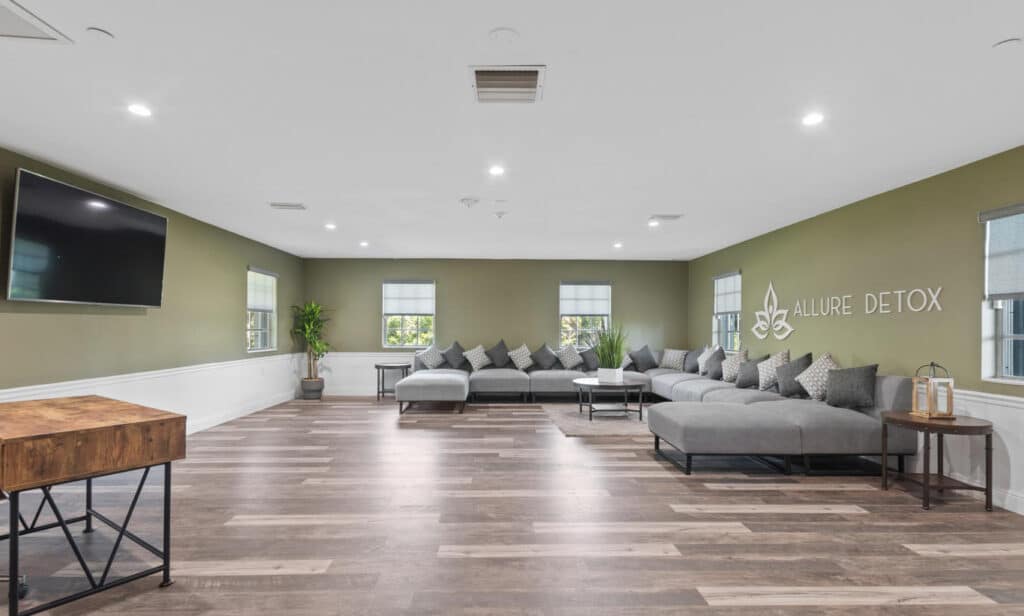
Who We Are: Allure Detox at West Palm Beach
Allure Detox is a licensed addiction treatment center. We offer comprehensive treatment programs, including medical detox, residential rehab, and aftercare support.
As part of the Recreate Behavioral Health Network, we provide a seamless transition between treatment levels to ensure your recovery never loses momentum.
We’re Gold Seal-approved by The Joint Commission (JCAHO), meaning we meet the highest national standards for safety and quality. We also hold a LegitScript certification, which confirms our commitment to medical ethics, legal transparency, and safe online practices.
Most important is our impact on the community. Hundreds of former clients and families have shared positive feedback about their time with us, resulting in a 4.8-star rating on Google.
Plus, we’re verified by Psychology Today and recognized as one of the leading providers in West Palm Beach by Rehab.com and Recovery.com.
Why Choose Allure Detox
A 2023 study found that early recovery is most difficult during “empty” or unstructured time. The lack of a clear plan increases the risk of relapse. The antidote? Consistency, structure, and predictable routines.
In other words, recovery isn’t just about avoiding substances but rebuilding how your day works.
On top of that, you’ll be returning to familiar faces, places, and situations. Some may bring comfort. Others can be triggering. That can feel like a lot to carry on your own, which is why our aftercare program is built around real-world support.
Guided by medical experts in psychiatry and addiction medicine, our aftercare staff includes specialists in family services, career goals, behavioral health, and alumni relations. Recovery affects every part of your life, and our approach reflects that.
Patient safety and clinical integrity are foundational to how we operate. Our leadership team brings extensive experience in healthcare facility administration and regulatory compliance, including expertise in health law.

What Addiction Aftercare Looks Like
Relapse prevention isn’t one-size-fits-all. People come from different backgrounds and turn to substances for different reasons. To be effective, a treatment plan must be as unique as the individual.
Aftercare at Allure Detox is structured, individualized, and clinically guided. We want to help patients maintain their progress as they navigate the responsibilities and stresses of daily life.
Our strategy addresses your specific mental health challenges, personality traits, and environmental stressors. We take a deep look at your living arrangements, work goals, and family dynamics. We collaborate with you to identify your personal triggers.
By understanding the specifics, we’re better able to equip you with tools to build a more sustainable recovery program.
This includes:
- Coping skills to manage cravings
- Support contacts to call when you feel vulnerable
- Sober housing if home isn’t stable
- Scheduled therapy sessions for your emotional stability
- Action steps to handle high-risk situations

Types of Addiction Aftercare
Your addiction aftercare program may include the following:
Outpatient Care
Outpatient programs are a vital “step-down” in the continuum of care. This is where you transition from the highly controlled environment of residential rehab to full independence as you re-engage with the world at large.
You’ll no longer live at the facility, but there’ll still be clinical oversight. That means you continue to attend scheduled therapy and medical check-ins. This way, therapists can guide you on how to apply coping skills in real-life scenarios and refine those tools as new challenges arise.
Here are your options:
1. Partial Hospitalization Program (PHP)
PHP is the most structured level of outpatient care. Despite the term “hospitalization,” there won’t be overnight stays. It’s often called “day treatment” because you spend the majority of the day at the treatment facility before returning home or to a sober house in the evening.
Treatment is carried out for several hours a day, multiple days a week. You’ll have a full schedule of therapy sessions, group meetings, and medical monitoring. This is perfect if you find yourself struggling with unstructured time.
2. Intensive Outpatient Program (IOP)
IOP offers fewer hours than PHP but still maintains consistent weekly therapy. It’s a great fit if you have a supportive home environment but aren’t quite ready to manage everything on your own.
You’ll appreciate the flexibility. While PHP fills your day, IOP lets you return to school, work, or family responsibilities. You can practice new habits and coping skills in the morning and discuss how it went in therapy in the evening.
3. Standard Outpatient Program (OP)
OP is the least intensive level and the final step-down of care. At this point, you’ve achieved significant stability and a firm grasp of your relapse prevention skills. Your focus will be more on long-term maintenance.

Therapy and Counseling
Relying on “willpower” alone is clinically insufficient. Lasting recovery requires retraining the brain’s response to stress and triggers.
Our aftercare programming uses structured frameworks that address the psychological and behavioral roots of substance abuse. Let’s examine our specialized therapies for aftercare:
1. Cognitive Behavioral Therapy
Cognitive Behavioral Therapy (CBT) is a cornerstone of our aftercare approach. It’s based on the principle that your thoughts, feelings, and actions are interconnected.
Addiction often feeds on distorted thinking. You have inner voices that say, “I can’t handle this” or “One drink won’t hurt.” CBT trains you to catch these destructive thought bubbles, challenge them, and swap them with healthier, more adaptive ones.
According to a 2023 study, CBT significantly reduces relapse rates while actively building resilience. It also highlights that the critical window for success is the first three months after treatment, as patients practice these new skills.
2. Dialectical Behavioral Therapy
Another component of our aftercare toolkit is Dialectical Behavior Therapy (DBT). Here, you’ll learn to accept and manage intense feelings without relying on substances for relief.
DBT focuses on four essential skills:
- Mindfulness (being in the present)
- Distress tolerance (Handling stress or cravings without acting on impulse)
- Emotional regulation (learning to balance your moods before they become overwhelming)
- Interpersonal effectiveness (communicating clearly, setting boundaries, and maintaining healthier relationships)
In short, DBT is for emotions as CBT is for thoughts.

12-Step Treatment Program
Addiction recovery is a lifelong process. To maximize the gains of aftercare treatment, you need to strengthen your support system. Often, the most profound kind of support comes from people in recovery like you. And you can find it in 12-step programs.
While therapy helps you understand the psychological aspect of addiction, peer-led groups, such as Alcoholics Anonymous (AA) or Narcotics Anonymous (NA), offer community, fellowship, and service. The program is based on a set of spiritual and character-building principles.
A 2007 preliminary study shows that involvement in mutual-help groups leads to better long-term outcomes. Simply attending meetings can help, but real change usually comes from active participation. That includes:
- Getting a sponsor
- Working the steps with a sponsor
- Reading 12-step literature
- Doing service (greeting newcomers, making coffee, setting up chairs, etc.)
Should You Get a Sponsor?
First, what is a sponsor?
A sponsor is someone further along in recovery who has successfully worked the 12 steps and volunteers to mentor a newcomer.
Getting a sponsor is widely considered to be one of the most effective ways to increase abstinence and support long-term recovery.
A 2017 study involving alcohol-dependent adults found that those with an AA sponsor at three months were nearly three times more likely to be sober six months later compared to unsponsored participants. Even if a slip did occur, they had 21% more abstinent days and reported lower consumption.
We believe these outcomes stem from the unique nature of the sponsor-sponsee relationship. Unlike a therapist whom you see for a scheduled hour, a sponsor is more within reach when your triggers or cravings happen.

Alumni Programs
Alumni programs keep you connected to the treatment center long after you graduate from outpatient care. Through alumni events, group check-ins, workshops, and sober social activities, you remain part of that vibrant community.
That feeling of connectedness matters because it improves social learning. In an editorial on human connection as addiction treatment, experts agree that non-faith-based communities are just as essential to successful recovery.
Alumni activities usually include regular check-in dinners and sober outings like hiking or sports leagues. You can also have the opportunity to mentor those in early recovery as you gain more time in sobriety.
Additionally, many alumni programs give you access to exclusive resources, such as alumni-only workshops, newsletters, and digital apps that provide daily inspiration.
Sober Living Homes
For many people, home isn’t always sweet home. High-stress living environments are disruptive and can jeopardize your hard-won progress.
Sober living homes offer a safe alternative. Residents follow simple rules, help with chores, and participate in community activities, all designed to strengthen healthy habits and reinforce positive behaviors. Most importantly, you’re expected to stay substance-free.
Living alongside others in early recovery also builds connection. You share experiences, celebrate milestones, and lean on each other during tough times. This is helpful if you struggle with isolation.
How Long Can You Stay at a Sober Home?
Most sober living homes let you stay as long as you like, as long as you respect the house rules and keep up with payments. Rent and fees are usually paid weekly or monthly.
After putting in your application, most homes require a quick interview or meeting to make sure you’re a good fit. It’s important to understand that different homes have different standards for entry.
Many networks, like Oxford Houses, are peer-run, meaning you need majority approval from current residents to move in. Also, they often require a baseline of clean time (usually at least 30 days).
Because many sober residences are self-supported, you’re expected to have a plan for rent and food, whether through employment or EBT.
You can check vacancies at Oxford Houses by simply searching for “West Palm Beach.” You’ll see real-time availability and contact numbers for house secretaries.
Sober Living Scholarships
If you lack the resources to pay for housing, you can try applying for sober living scholarships. That said, availability can be limited, as funds depend on donations.
If you’re just starting out, these foundations can help you get back on your feet:
- Blue Waters Recovery (options for coverage of intake costs, one-week rent, or one-month rent)
- ARCHway HOPE Fund (covers first month of rent)
- The Solida Foundation (covers up to 9 months of rent)

Who Benefits Most From Addiction Aftercare?
Anyone who has completed a primary treatment program can benefit from aftercare, since relapse rates are quite high in the first year.
While aftercare helps everyone, certain groups see even more dramatic results:
- People with dual diagnosis (SUD with a co-occurring mental health disorder like depression or PTSD)
- Individuals with a history of relapse
- Those returning to high-stress environments
- Those with limited sober support at home
Is Addiction Aftercare Covered by Insurance?
Yes. Addiction aftercare is covered since it’s integral to the treatment and rehab process. In fact, specific federal and state laws treat substance use disorder (SUD) with the same importance as any other illness.
Under the Affordable Care Act (ACA), SUD is classified as one of the 10 essential health benefits.
This means that all marketplace plans, Medicaid expansion plans, and most small-group plans are legally required to cover addiction treatment. This includes the outpatient aftercare we’ve discussed.
There’s also the parity rules. Insurance providers are prohibited from imposing more restrictive financial requirements (like higher copays) or treatment limitations (like a limit on the number of sessions) for addiction than they do for medical or surgical services.
For example, if your plan covers unlimited visits to your cardiologist, the same should apply to your aftercare treatment.
How to Begin Aftercare at Allure Detox
The process is pretty straightforward. It starts with a free consultation with one of our team members. The interview is meant to understand your needs, answer your questions, and explore your options.
Next, we take care of insurance verification. We accept most major insurance plans, including Cigna, Optum, Blue Cross Blue Shield, United Medical Resources (UMR), and MultiPlan/PHCS.
A clinical assessment follows. We want to make sure to link your aftercare program to your current or previous treatment. Rest assured that your privacy is a top priority every step of the way.
Frequently Asked Questions
How long should aftercare last?
Is aftercare required after rehab?
Does insurance cover aftercare services?
Is sober living covered?
What happens if relapse occurs during aftercare?
What if I don’t feel ready to leave residential treatment?
Do I have to attend 12-step meetings?

Final Thoughts
In many ways, the real work begins after treatment ends. In the early days after rehab, your routines, support system, and structure can shape the direction of your recovery.
You don’t achieve recovery just by not using. You achieve it by creating a life where it’s easier not to use.
That’s why addiction aftercare is completely necessary. It doesn’t mean you’ll be in treatment forever. On the contrary, it’ll help you live well outside the walls of a facility.
You’ll walk into familiar environments with a plan. You’ll know who to call when you’re feeling overwhelmed. You’ll be connected to peers who understand what you’re going through.
If you or someone you love is approaching the end of residential treatment, don’t leave the next chapter to chance. Contact us today so we can discuss your aftercare options.