


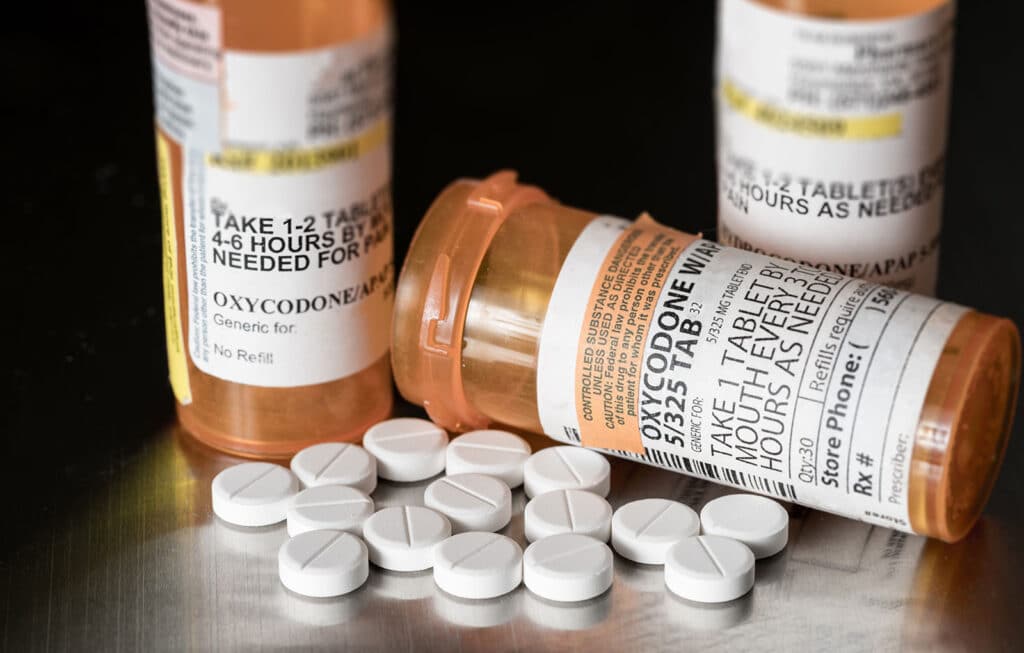
Someone hands you a bottle of OxyContin after surgery. The label says: take one every twelve hours. Simple enough, right?
But here’s the question nobody asks out loud in the doctor’s office: how long does it take to get addicted to OxyContin?
There’s no single answer. While it depends largely on the person, medical data reveals a very specific window when physical dependence and habit-forming behaviors start to take root.
OxyContin Isn’t Just Another Painkiller
OxyContin is a brand-name, extended-release form of oxycodone, a powerful semi-synthetic opioid made from a compound in the opium poppy, the same plant that gives us morphine and codeine.
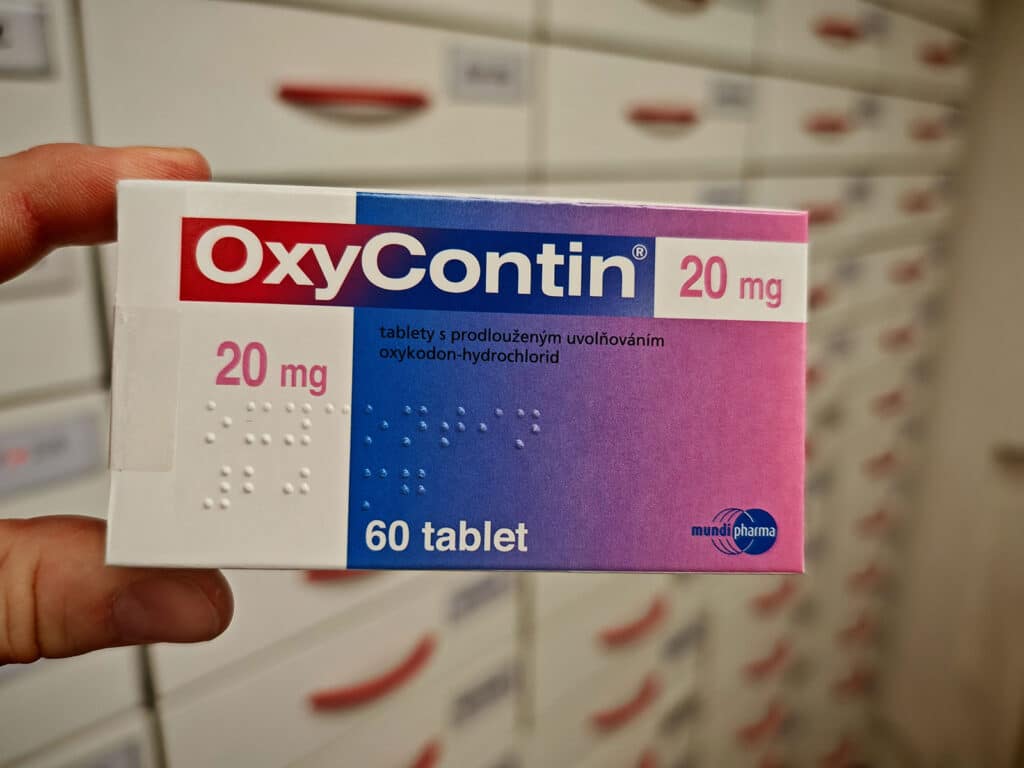
Doctors may prescribe OxyContin after surgery, for serious injuries, or for chronic pain conditions that haven’t responded to other treatments. When taken exactly as prescribed, it can provide significant pain relief.
It was designed to release medication slowly over twelve hours, which sounded like a safety feature. Fewer doses, steadier pain relief, less chance of misuse.
The reality is much more complicated. Because OxyContin pills contain a large amount of oxycodone packed into one tablet, crushing, snorting, or injecting the pill releases all of that medication at once instead of over half a day.
The better question is: How long does it take for a normal, well-meaning patient to lose control?
The Short Answer: Faster Than You’d Think
Your body can start becoming physically reliant on OxyContin in as little as five to seven days of regular use. True addiction, the uncontrollable urge to keep taking it, usually takes longer, but “longer” might only mean a few weeks.
But what’s the difference? Physical dependence is biological. It means your body has adapted to the drug and needs it to function normally.
Opioid addiction (or opioid use disorder), on the other hand, is when the drug takes over your mind and body. It’s a diagnosable condition involving compulsive drug-seeking behavior despite negative consequences.
You can be dependent without being addicted. But opioid dependence is almost always the first domino to fall.
How OxyContin Addiction Develops
Opioids like OxyContin work by latching on to receptors in your central nervous system. They block pain signals and flood your brain with dopamine, the chemical behind feelings of pleasure and reward. The result is intense euphoria. Warm, heavy, and comforting.
Use OxyContin enough, and your brain starts scaling down its own dopamine production, expecting the drug to do the work. Cravings begin creeping in. You reach for the bottle not because you’re in pain anymore, but because something feels off without it.
That’s tolerance building. You now need more of the drug to get the same relief, so you go for higher doses, more frequent use, or eventually other opioids like heroin or illicit fentanyl when the prescription runs out.
Factors That Speed Up the Timeline to OxyContin Addiction
Not everyone develops oxycodone addiction at the same rate. A few things tend to accelerate it.
Dose and Duration
The CDC found that the size of your dose changes your risk of opioid misuse dramatically.
Only about 0.7% of patients on low-dose prescription opioids developed a substance abuse issue. For patients on a high-dose prescription, that number jumped to 6.1%. For comparison, people who were never prescribed opioids had practically zero addiction risk (0.004%).
How long you take the medication matters just as much as how much you take. If you stay on opioids for more than three months, your risk increases by about 15 times.
Method of Use
When swallowed as prescribed, OxyContin enters your system slowly over several hours. It was designed this way to prevent the intense rush that drives users to addiction. Crushing, snorting, or injecting it delivers a massive dose all at once.
Before OxyContin was reformulated, people abused it by swallowing (55%), snorting (53%), and injecting (36%), with many using more than one method. But after the tablet was redesigned to prevent crushing (which turns it gummy-like instead of powdery), non-oral abuse dropped substantially.
Genetics
Research suggests that genetics account for roughly half of your overall risk when it comes to developing an opioid addiction. Your DNA influences how you process a drug like OxyContin in two ways.
First, it dictates how your liver metabolizes the drug. Specific liver enzymes break down oxycodone and clear it out of your system. Because of genetic variations, some people process the drug much faster or slower than average.
If your body burns through it too quickly, the drug hits you fast and wears off just as fast. This triggers early cravings and speeds up your tolerance.
Second, genetics control how your brain reacts to the chemical rush. Variations in your DNA alter your brain’s opioid receptors and dopamine pathways.
For one person, a standard dose of OxyContin might just numb their pain and make them sleepy. But for someone else with a different genetic makeup, that exact same pill might bring an overwhelming sense of joy and comfort.

Co-Occurring Mental Health Conditions
Anxiety, depression, PTSD, and chronic stress don’t cause addiction on their own. But they load the dice.
When researchers looked at data from more than 100,000 people dealing with opioid addiction, the overlap with mental health conditions was staggeringly high. Among those surveyed:
- 36% had depression.
- 29% had diagnosed anxiety.
- 21% had ADHD.
- 18% had PTSD.
- Nearly 9% had bipolar disorder.
Why the overlap? Opioids don’t just numb physical pain; they blunt your emotional pain, too.
Someone using an opioid like OxyContin to self-soothe anxiety or trauma is doing more than just managing their symptoms. They’re teaching their brain that a pill is the ultimate fix for all their bad feelings.
Prior Substance Use Disorder
A history of drug abuse involving alcohol, benzodiazepines, or other substances changes how your brain adapts to a new one. In fact, research consistently points to past substance use as one of the most reliable warning signs for opioid addiction.
A study tracked patients after their very first opioid prescription. Even after accounting for other risk factors, the researchers found that a history of mental health struggles or prior substance use was the single strongest predictor of who would eventually develop an opioid addiction.
Access
The logic is simple: the easier it is to get your hands on opioids, the higher the chance of misuse.
Surprisingly, only about 5% to 8% of people who misuse opioids get them from a stranger or dealer. National data shows that most people who misuse prescription painkillers get them from someone they know. About 40% get them free from a friend or relative.
The other major factor is how often a prescription gets refilled. In fact, medical prescriptions account for roughly 36% of the opioids that end up being misused. The longer a doctor keeps renewing a script, the more the drug embeds into daily life.

The Risks of OxyContin Addiction
OxyContin is incredibly potent. Like morphine and codeine, the natural opiates it was built from, and like hydrocodone, it carries a steep risk far beyond addiction alone.
The threat of opioid overdose is the most immediate, life-threatening danger. OxyContin suppresses the central nervous system, meaning it slows down your body’s most basic survival functions.
It slows your heart rate and, most dangerously, targets the part of the brain that controls the respiratory system.
During an overdose, your breathing can slow to a crawl or stop entirely. This dangerously slowed breathing, known as respiratory depression, starves the brain of oxygen and can cause permanent brain damage, coma, or fatal cardiac arrest.
OxyContin Addiction Treatment
Here’s some good news: opioid addiction treatment works, and it’s more accessible than ever. The gold standard for recovery is medication-assisted treatment (MAT). This approach pairs counseling with FDA-approved medications like Suboxone (buprenorphine and naloxone) or methadone.
These medications ease cravings and withdrawal symptoms without producing the same euphoric high. They give the brain and body room to heal without the constant pull of relapse.
Detox is usually the first step. It’s a medically supervised process that manages withdrawal safely, since quitting opioids cold turkey can be miserable and, in some cases, dangerous.
Without medical help, the early days of quitting can trigger severe physical distress, including intense nausea, vomiting, muscle aches, and insomnia.
From there, substance abuse treatment often includes individual counseling, group therapy, and family therapy. Once the physical baseline is stabilized, therapy helps you uncover the psychological triggers behind the drug use.
For people with depression, anxiety, or trauma, treating co-occurring mental health conditions alongside addiction significantly improves recovery outcomes.

Can OxyContin Addiction Be Prevented?
In many cases, yes. If you’ve been prescribed OxyContin, there are practical steps you can take to lower your risk:
- Always take the medication exactly as directed. Never increase your dose without speaking with your doctor.
- Avoid sharing your medication with others.
- Store it securely to prevent accidental or unauthorized use.
- If you notice that you’re relying on OxyContin for reasons beyond pain relief, or you find yourself thinking about it constantly, talk with your doctor ASAP.
Final Thoughts
So, how long does it take to get addicted to OxyContin?
For some people, addiction can begin within weeks. For others, it develops gradually over months. There’s no fixed timeline because every person’s biology, medical history, and patterns of use are different.
What matters most is recognizing the warning signs early.
If you or someone you care about is struggling with OxyContin, we at Allure Detox can help. We provide specialized medical care, detox, and guidance needed to navigate this safely and comfortably.
Take the first step today. Contact us for a confidential consultation, and let’s talk about your options for recovery.
Written by: The Allure Detox Editorial Team
Published on: July 9, 2026
Updated on: October 22, 2026