
Ask a question about our program
Instant answers about services, insurance, and admissions. For anything personal, call us directly.


If you would like to learn more about Allure Detox, the fastest way to get your questions answered is to give us a call! We have friendly representatives available to take your call 24 hours a day.
(561) 475-3505
If you would like to learn more about Allure Detox, the fastest way to get your questions answered is to give us a call! We have friendly representatives available to take your call 24 hours a day.
(561) 475-3505
Alcohol is one of the most dangerous substances to detox from. After prolonged or excessive alcohol use, your body may begin to depend on the substance to function.
Medically reviewed by Duy Nguyen, D.O. — Medical Director, board certified in General Psychiatry and Addiction Medicine.
Reviewed for clinical accuracy, including alcohol withdrawal symptoms and timeline, medical detox, medications for alcohol use disorder, and emergency warning signs. Last reviewed . See medical references.
Allure Detox is a medically supervised alcohol detox and residential treatment center in West Palm Beach, Florida. Every medical detox here is physician-directed, monitored by nurses 24 hours a day, and followed by a written plan for what comes next, so the medical risks of stopping are managed and staying stopped has a plan behind it.
Medication adjusted to your symptoms by a medical director board certified in addiction medicine.
Nursing on site around the clock through the highest-risk window.
Licensed by the Florida Department of Children and Families and LegitScript certified. Confidential care from first call to discharge.
This page follows alcohol addiction from the first warning signs through detox to life after treatment. Read it straight through, or jump to the part that answers your question right now.

Alcohol is legal, socially accepted, and served at nearly every celebration in American life. It is also one of the most physically dangerous substances a person can stop using without help. That contradiction catches a lot of people off guard.
Unlike most drugs, alcohol withdrawal can be life threatening.[3] When the body has adapted to a constant depressant, removing it suddenly leaves the central nervous system in a state of overexcitement. That can trigger seizures, hallucinations, and delirium tremens.
This is why willpower alone is not the issue, and why, once physical dependence has set in, quitting cold turkey at home can do more harm than continuing to drink until a medical team is in place.
deaths in the United States each year were attributable to excessive alcohol use during 2020–2021, making it a leading cause of preventable death — a 29% increase from just four years earlier.[2]
CDC, Deaths from Excessive Alcohol UseProlonged drinking rewires the brain’s chemistry. Over time the body stops producing its own calming signals at normal levels because alcohol is doing that work. Take the alcohol away and the system goes into shock.
Dependence does not always look like the stereotype. Plenty of people who meet the clinical criteria for alcohol use disorder, the most common substance use disorder in the country, hold steady jobs, raise families, and have never missed a day of work. What they share is a body that has stopped functioning comfortably without a drink.
Many people struggling with alcohol are also managing depression, anxiety, or unresolved trauma. Each condition feeds the other. Treating one without addressing the other rarely holds, which is why an accredited facility with dual diagnosis capability matters more than proximity or price.
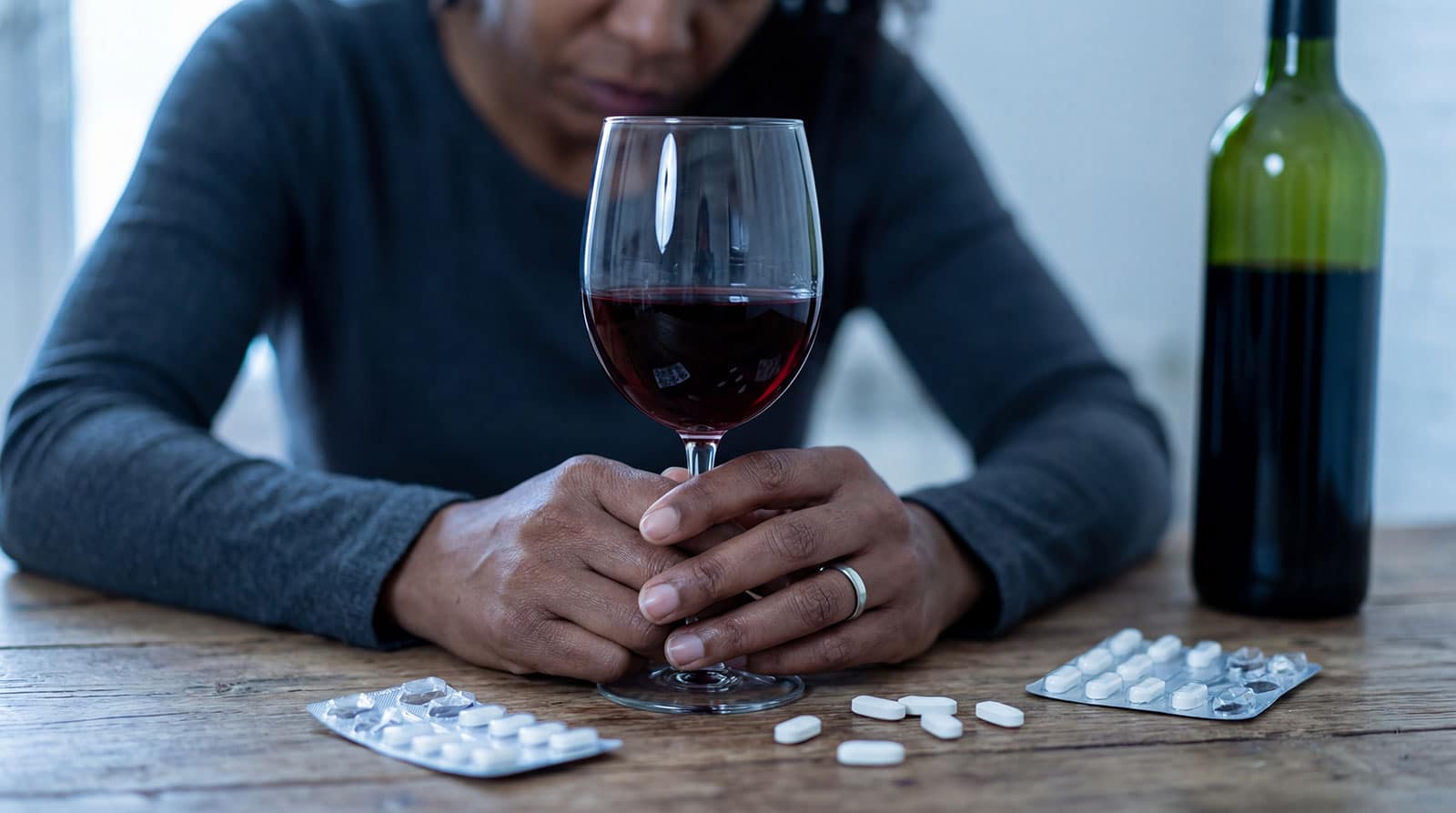
Alcohol use disorder develops gradually, and the earliest signs are easy to explain away. If several of the following sound familiar, either for you or for someone close to you, it is worth a conversation with a clinician.
Alcohol affects nearly every organ system. Some of the damage reverses with sustained abstinence. Some of it does not, which is the strongest practical argument for getting help sooner rather than at the point of crisis.

The symptoms of alcohol withdrawal range from unpleasant to fatal, and severity depends on how much you have been drinking, for how long, your age and general health, and whether you have gone through withdrawal before. Each prior episode tends to make the next one worse, a pattern clinicians call kindling.[3]
Delirium tremens is a medical emergency. Even with treatment it carries a meaningful mortality rate, and that rate climbs sharply without it.
Alcohol is one of the few substances whose withdrawal can kill you. Seizures and delirium tremens can develop with little warning, including in people who have detoxed before without complications. Do not attempt to stop on your own after heavy or long-term drinking. If you or someone near you experiences a seizure, severe confusion, chest pain, or a high fever, call 911 immediately.
Not everyone who stops drinking needs a hospital-level detox. These are the situations where a medically monitored detox program is the safe choice and detox at home is not. If more than one applies to you, call before you stop.

If any of the above applies to you, call before you stop drinking. Free, confidential insurance benefit check, and same-day admission is often possible.
The timeline below reflects a typical course as described in clinical guidance on alcohol withdrawal management.[3] Individual experience varies considerably, which is exactly why detox is monitored around the clock rather than checked on periodically.
Anxiety, hand tremor, sweating, nausea, headache, and trouble sleeping begin as blood alcohol falls. Many people mistake this stage for a bad hangover.
Tremor and agitation increase. Some people begin experiencing alcoholic hallucinosis, seeing or feeling things that are not there while otherwise knowing where they are.
Withdrawal seizures are most likely in this window. Blood pressure, heart rate, and temperature are monitored continuously, and medication is adjusted as symptoms change.
For a minority of patients, typically those with long or heavy drinking histories, delirium tremens can emerge. This is the stage that makes unsupervised detox genuinely dangerous.
Physical symptoms ease and appetite and sleep begin to return. Clinical attention shifts toward stabilization and planning the next stage of care.
Sleep disruption, mood swings, low energy, and intermittent cravings for alcohol can persist for weeks. This is a normal part of the brain recalibrating, and it is a common point of relapse without structured support.

Alcohol detoxification under medical supervision is not simply waiting out the withdrawal process in a safe place. It is active medical stabilization: the symptoms above are anticipated, measured, and treated before they escalate, in a controlled medical environment where a seizure or a spike in blood pressure is a managed event rather than an emergency.
A nurse and physician review your drinking history, prior withdrawal episodes, medications, and any co-occurring conditions. Baseline vitals and labs are taken. Most patients are in a bed with a medication plan within a few hours of walking in.
Withdrawal is scored on a standardized scale (the CIWA-Ar) at regular intervals.[3] Benzodiazepines or other medications are given on that score, not on a fixed clock, so tremor, anxiety, and blood pressure are controlled ahead of the 24-to-72-hour danger window rather than after it.
Nursing staff check on you through the night. This is the part that cannot be replicated at home: withdrawal seizures and delirium tremens tend to arrive in the early hours, and someone is there when they do.
Thiamine, fluids, and anti-nausea medication address the deficiencies heavy drinking causes. Meals, a quiet room, and sleep support matter more than people expect in the first day.
Medication is tapered as your scores fall. Once the acute risk has passed, usually by day three or four, the focus shifts from medical stabilization to continuing care planning: a psychiatric evaluation for co-occurring disorders, a conversation about residential treatment, and the practical work of building the plan for what happens after detox. Holistic therapies such as yoga, meditation, and massage may be introduced as you are physically able.
Instant answers about services, insurance, and admissions. For anything personal, call us directly.

Almost everyone who needs detox already knows it. What delays the call is rarely medical. Tell us, anonymously, which one is yours - and see what others said.
Medical detox alone is not treatment. It resolves the physical dependence in about a week and does nothing about the reasons the drinking started, which is why people who leave after detox alone relapse at very high rates. Alcohol rehab happens in stages, and the handoff between them is where people are most often lost. At Allure Detox the same clinical team carries you from the first day of withdrawal through discharge planning, using evidence-based, trauma-informed care and an integrated treatment model for co-occurring disorders. The same team treats substance abuse involving opioids, benzodiazepines, and stimulants, so if alcohol is not the only thing you are using, it is part of the plan from day one.
The first five to seven days. Vitals are checked around the clock, and benzodiazepines or other medications are used as needed to prevent seizures and delirium tremens while the body clears alcohol safely.
Alcohol detox →Once withdrawal is stable, treatment shifts to why the drinking started: individual and group therapy, relapse prevention built around your specific triggers, and a daily structure that does not revolve around alcohol.
Inpatient alcohol treatment →Alcohol is often self-medication for depression, anxiety, or trauma. Our psychiatrist evaluates you once you are sober enough for an accurate picture, then treats both conditions together so one does not pull you back into the other.
Dual diagnosis →Naltrexone, acamprosate, and disulfiram are FDA-approved for alcohol use disorder.[4] They reduce cravings for alcohol or make drinking unrewarding, and can meaningfully lower relapse risk. If one fits your history, it is prescribed and monitored here and continued after discharge.
Medication-assisted treatment →A written plan for the first ninety days, when alcohol relapse risk is highest: outpatient referrals, medication follow-up, sober support, and an alumni community that has been through the same thing.
Alumni program →
Detox gets alcohol out of the body. These are the therapies that address why it was there. Treatment is individualized: your plan is built from your assessment, your history, and any co-occurring mental health disorders, and it changes as your team sees what is working. What actually gets customized is therapy intensity, group placement, medication, and the clinical focus of your sessions.
Group programming is kept small and, where it helps, organized by age and gender. Men and women tend to face different social pressures around drinking, trauma shows up differently, and a 62-year-old retiree and a 24-year-old are rarely dealing with the same triggers. Being in a room with peers at a similar life stage makes the honesty come faster. Older adults, professionals who need discretion, and patients with a trauma history each get programming adjusted for those needs, with confidential care as the default rather than something you have to ask for.
Relapse risk is at its highest in the first weeks and months after discharge, usually when the structure of treatment disappears and the old routine is waiting. Allure Detox builds the next stage before you leave, not after.
Referrals to a partial hospitalization program (PHP) or an outpatient program near home, medication follow-up, a sober living recommendation if your home environment is not safe, and a relapse prevention plan built around your specific drinking triggers. All of it finished with your clinical team before discharge.
Events, check-ins, and peers who know exactly what a wedding, a work dinner, or a bad week looks like without alcohol. Peer support programs such as AA perform as well as or better than other established treatments at helping people stay abstinent long term,[7] so we also connect you with 12-step and non-12-step support groups near where you live and the coping mechanisms you practiced here have somewhere to go.
Guidance for spouses, parents, and children on what to expect at home, how to handle alcohol in the house, and where their role ends. More on family involvement below.
Virtual sessions and medication management for patients who go home out of state, so sobriety does not depend on geography.

Alcohol use disorder is a family condition in practice, even when only one person is drinking. By the time someone arrives at detox, spouses, parents, and children have usually spent years managing, covering, arguing, and worrying. Family programming at Allure Detox treats that as part of the clinical picture, not a sidebar.
The first days are medical, and contact is limited so the patient can rest and stabilize. Our Family Services Advocate is the family's point of contact: what is happening, what the timeline looks like, and what to expect when phone calls resume. Families are not left guessing.
Family therapy sessions, in person or by telehealth, with a licensed family therapist. These address the specific damage drinking did to trust and communication, and give family members a structured place to say what they need to say. Family education covers what alcohol dependence is as a health condition, why willpower was never the issue, and what relapse risk actually looks like.
Before discharge, families get practical guidance: whether alcohol should be in the house, how to respond to early warning signs without policing, how to support recovery without enabling it, and where the family's responsibility ends and the patient's begins. Clear boundaries protect the relationship as much as the sobriety.
Emotional recovery lags behind physical recovery. The first months at home can bring irritability, low mood, and old conflicts resurfacing, and families are told to expect that rather than read it as failure. Family members are welcome at alumni events and can be referred to their own support groups, because the household's long-term progress depends on more than one person's.

In most cases, yes, and often more of it than you expect. Medical alcohol detox is a covered medical service, and Allure Detox works with most major commercial and private insurance plans, including Blue Cross Blue Shield, Aetna, Cigna, Humana, First Health, and Carelon Behavioral Health. Depending on your plan, insurance coverage can extend to detox, residential treatment, and continuing care, and in some cases covers treatment in full.
The Mental Health Parity and Addiction Equity Act requires insurers to cover substance use disorder treatment on terms no more restrictive than other medical care.[6] In practice that means detox and residential rehab are usually covered far better than people assume.
Send your insurance details through the online form or read them over the phone. An admissions coordinator confirms your coverage options, deductible, and estimated out-of-pocket cost, usually within the hour. No obligation, and nothing is reported to your employer.
Private pay, payment planning, and help understanding what your treatment benefits do and do not cover. If you are uninsured or underinsured, admissions walks through every alternative before anyone talks about cost as a barrier.
The benefit check is not a separate billing task. The same call covers the clinical assessment, and once coverage is confirmed the coordinator schedules your arrival, often the same day. Length of stay is set medically, then matched to what your plan authorizes.







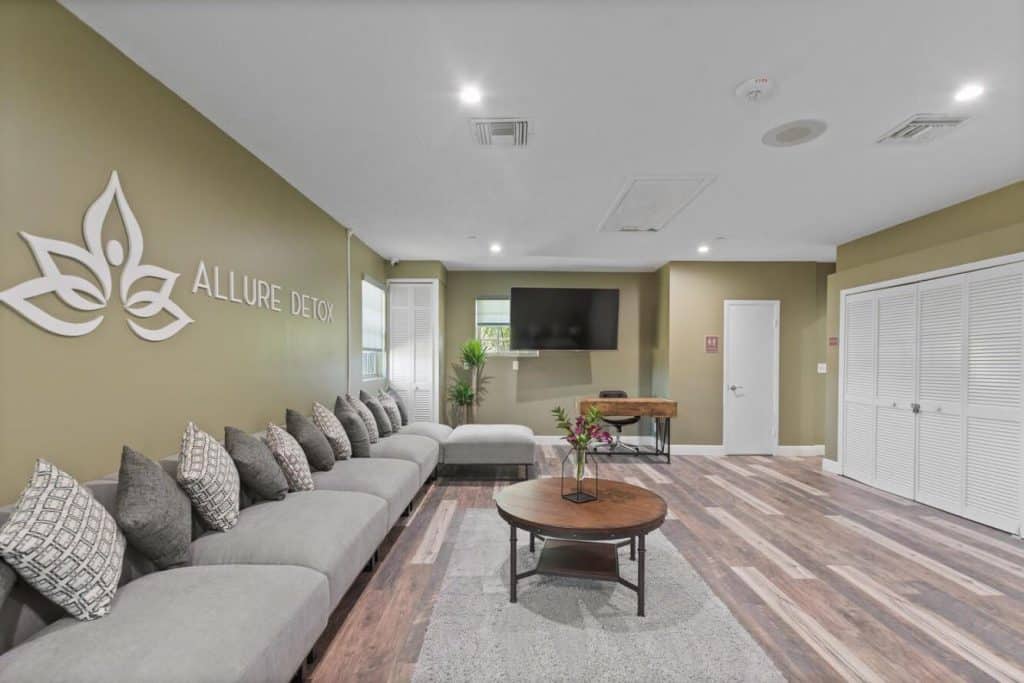
Alcohol withdrawal is physically miserable even when it is medically safe, and where you go through it affects how well you sleep, eat, and engage with what comes next. Allure Detox is a small residential facility, not a hospital ward: a medically supervised environment with a qualified and licensed medical team on site around the clock, in a quiet residential neighborhood of West Palm Beach where the first thing you notice is that it is calm.
Detox and residential care happen in the same clinical treatment residences at 900 54th Street. The layout is deliberate. Bedrooms are set apart from the common areas so the first few nights can be spent resting rather than in a hallway, and the medical team comes to you. Privacy is built in: a small patient census, a discreet entrance, and staff who understand that most people here would rather their neighbors did not know.
Regular meals, quiet hours, and a daily rhythm that gives a body used to alcohol something else to organize around. Sleep and appetite come back faster in a settled environment than in a chaotic one.
A rec room, comfortable common areas, and outdoor space under the South Florida sun for the days after the acute phase passes, when getting out of a bedroom starts to matter for well-being.
Group programming and structured activities start once you are physically able. Nothing is scheduled on the first day but rest.
Walk through the detox and residential wings, rooms, and common areas before you decide. Everything you see is the building you would be admitted to.









Alcohol withdrawal is the one detox where the credentials of the people watching you actually matter. Our medical director is board certified in both psychiatry and addiction medicine, and every detox is physician-supervised with 24-hour nursing. After stabilization you will also work with licensed therapists, trauma specialists, and family and continuing care staff.
The clinical information on this page is checked against current guidance from the CDC, NIAAA, ASAM, and peer-reviewed research. Numbered citations in the text link to the sources below.
At Allure Detox, client safety and comfort are our top priorities. From the moment you walk through our doors, you can expect a warm welcome from every member of our team. We are committed to providing exceptional drug and alcohol detox services and creating an environment that supports long-term, successful recovery.
At Allure Detox, we recognize that facing drug and alcohol withdrawal alone can be daunting. We're here to listen, understand your challenges, and provide personalized guidance as you explore professional detox options. Our admissions team is ready to support you, whether you're seeking treatment, need advice, or just want someone to talk to.